
Exercise & Weight Loss: Everything You Need To Know
When it comes to losing weight, one of the biggest questions people ask is: How important is exercise? While there are countless diets, workout programmes, and weight loss trends promising fast results, the truth is much simpler. Successful, long-term weight loss comes from creating healthy habits that combine good nutrition, regular physical activity, quality sleep, and consistency.
Exercise is an essential part of a healthy lifestyle, but it isn’t just about burning calories. It improves your physical health, boosts your mood, protects your heart, strengthens your muscles, and makes it much easier to maintain weight loss over time. Whether you’re just starting your weight loss journey or looking to break through a plateau, here’s everything you need to know about the role of exercise.
Can You Lose Weight Without Exercise?
Technically, yes. Weight loss occurs when you consume fewer calories than your body burns, creating what’s known as a calorie deficit. Many people achieve this through dietary changes alone.
However, relying solely on diet has its limitations. Losing weight without exercising can increase the risk of losing muscle mass alongside body fat. Since muscle helps keep your metabolism active, preserving it is important for long-term success.
Adding regular exercise to your routine offers several advantages:
- Helps preserve lean muscle while losing fat
- Increases daily calorie expenditure
- Improves cardiovascular health
- Boosts energy levels
- Supports better mental health
- Makes it easier to maintain weight loss in the long run
The most successful weight loss plans combine healthy eating with regular physical activity.
How Much Exercise Do You Need?
The NHS recommends adults aim for:
- At least 150 minutes of moderate-intensity exercise each week, or
- 75 minutes of vigorous activity, alongside
- Strength training at least twice weekly
If your goal is weight loss, you may benefit from increasing activity beyond these minimum recommendations, particularly as your fitness improves.
Remember, every movement counts. You don’t need to spend hours in the gym. Walking more, taking the stairs, gardening, cycling to work, or playing with your children all contribute towards a more active lifestyle.
The Best Types of Exercise for Weight Loss
There isn’t a single “best” exercise for everyone. The most effective workout is one you’ll enjoy enough to do consistently.
Walking
Walking is one of the easiest and most accessible forms of exercise.
Benefits include:
- Suitable for beginners
- Low impact on joints
- Improves heart health
- Burns calories without excessive strain
- Easy to fit into daily life
A brisk 30-60 minute walk most days of the week can make a meaningful difference over time.
Strength Training
Many people overlook resistance exercise when trying to lose weight, but it’s one of the most valuable forms of exercise.
Strength training includes:
- Weight machines
- Free weights
- Resistance bands
- Bodyweight exercises such as squats, lunges and push-ups
Building muscle helps your body burn more calories throughout the day while improving strength, posture, and bone health.
Cardio Exercise
Cardiovascular exercise raises your heart rate and helps increase calorie expenditure.
Popular options include:
- Running
- Cycling
- Swimming
- Rowing
- Dancing
- Cross trainer workouts
Cardio also improves endurance, heart health and lung function.
High-Intensity Interval Training (HIIT)
HIIT alternates short bursts of intense activity with brief recovery periods.
For example:
- 30 seconds of fast cycling
- 90 seconds of slow cycling
- Repeat for 20 minutes
HIIT workouts are efficient and can improve fitness in less time than longer steady-state sessions. However, they aren’t essential and may not be suitable for complete beginners or those with certain health conditions.
Is Cardio Better Than Strength Training?
Both play different but equally important roles.
Cardio tends to burn more calories during the workout itself, making it useful for creating a calorie deficit.
Strength training helps preserve muscle, supports metabolism, improves body composition and contributes to long-term weight management.
Ideally, your weekly routine should include both.
Does Exercise Help Burn Belly Fat?
Unfortunately, it’s not possible to target fat loss from one specific area of the body.
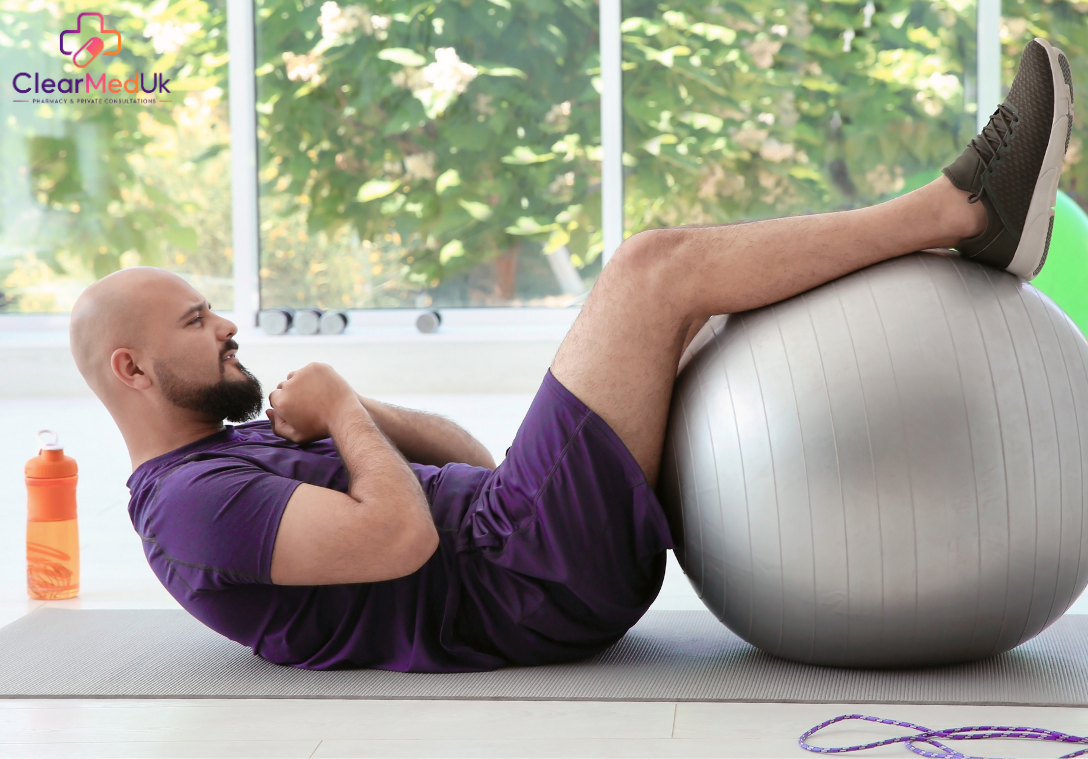
Despite common myths, exercises like sit-ups won’t specifically burn abdominal fat.
Instead, fat is lost gradually from across the body as you maintain a calorie deficit over time. Genetics largely determine where you lose fat first.
Regular exercise combined with healthy eating remains the most effective approach for reducing overall body fat, including around the abdomen.
Exercise and Prescription Weight Loss Medication
Prescription weight loss medications, such as GLP-1 receptor agonists including semaglutide (Wegovy®) and tirzepatide (Mounjaro®), work by reducing appetite and helping people consume fewer calories.
These medications are most effective when combined with healthy lifestyle changes.
Exercise becomes particularly important because it can:
- Help preserve muscle mass during weight loss
- Improve physical fitness
- Support long-term weight maintenance
- Reduce the risk of regaining weight after treatment
- Improve blood sugar control and cardiovascular health
If you’re taking prescription weight loss medication, speak to your healthcare provider about developing an exercise programme that’s appropriate for your current fitness level.
How to Stay Motivated
Starting is often the hardest part. Motivation naturally comes and goes, so creating sustainable habits is far more important than relying on willpower.
Some practical ways to stay consistent include:
- Set realistic, achievable goals
- Choose activities you genuinely enjoy
- Exercise with a friend or family member
- Track your progress
- Celebrate non-scale victories such as improved fitness or increased energy
- Schedule exercise into your weekly routine
- Focus on consistency rather than perfection
Missing one workout won’t ruin your progress. Simply return to your routine as soon as possible.
Common Exercise Mistakes
Many people unintentionally make exercise harder than it needs to be.
Some common mistakes include:
Doing too much too soon
Starting with intense daily workouts often leads to burnout or injury.
Only focusing on calories burned
Exercise provides many benefits beyond weight loss, including improved mental wellbeing, stronger bones, and better cardiovascular health.
Ignoring recovery
Your body needs time to recover. Rest days, quality sleep and good nutrition are all essential parts of a successful fitness plan.
Comparing yourself to others
Everyone progresses at their own pace. Focus on your own journey rather than comparing results with others.
The Bottom Line
Exercise is one of the most powerful tools for improving your health and supporting sustainable weight loss. While diet plays the biggest role in creating a calorie deficit, physical activity helps preserve muscle, improves fitness, supports mental wellbeing and makes maintaining weight loss much easier over the long term.
The best exercise programme isn’t necessarily the most intense—it’s the one you can stick with consistently. Whether that’s walking every morning, lifting weights twice a week, swimming, cycling or joining a fitness class, regular movement adds up over time.
If you’re considering prescription weight loss medication, remember that exercise and healthy lifestyle habits remain key to achieving the best possible results. Sustainable weight loss isn’t about quick fixes—it’s about building habits that support your health for years to come.
This article is for informational purposes only and should not replace medical advice. Always consult a qualified healthcare professional before starting a new exercise programme or prescription weight loss treatment, particularly if you have underlying medical conditions.